NEW: The 2023-2025 Digital Yearbook is Now LIVE!
EXPLORE NOW
Mariah Smith
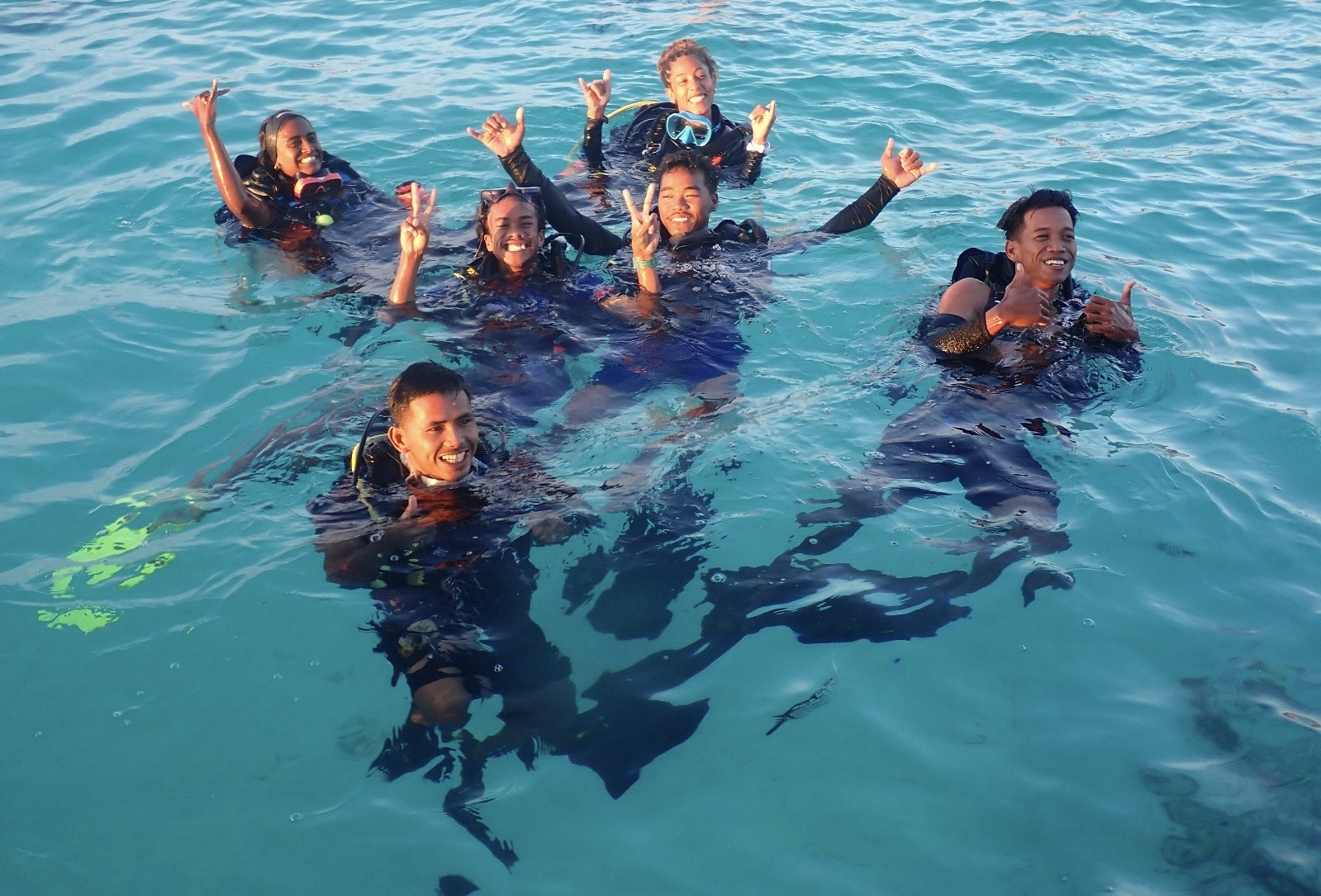
I never would have guessed I’d end up in graduate school, let alone a Master of Science program. But here I am, diving (literally and figuratively) into research that connects people and the ocean.
My love for the ocean started early, around age nine, though I can’t pinpoint exactly where it came from. My best guess is a childhood trip to Florida combined with a little Disney magic from The Little Mermaid. Still, growing up in Idaho, far from any coastline, the ocean wasn’t exactly part of my daily life or education. I wasn’t one of those “I grew up free diving at five” stories or “my dad was a boat captain somewhere exotic.” I was an Idaho potato, raised in Boise, who spent summers riding horses in the mountains around Salmon, Idaho. I loved those adventures and still do, but it took me a long time to truly discover the depth of the ocean.
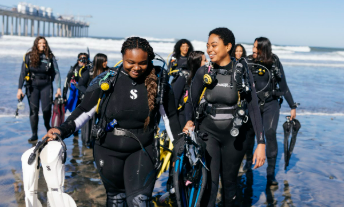
After finishing my undergraduate degree, I decided I wanted to live somewhere warm and moved to Hawai‘i for a year and a half. That’s where everything changed. I started snorkeling and freediving multiple times a week, which eventually led to scuba diving. From there, I began taking dive trips every year, but it still never occurred to me that the ocean could become a career. I didn’t know anyone who looked like me working in marine spaces, and deep down, I didn’t believe I’d belong or be welcomed there.
Then came 2020, a year of reckoning. Amid the pandemic and the resurgence of the Black Lives Matter movement, conversations around representation and belonging hit home for me. I started exploring where people of color were showing up in spaces I hadn’t imagined us before—marine science, climbing, and conservation. Social media became a gateway to discovering Black and brown divers, scientists, and climbers, and for the first time, I began to see myself there too. That same year, I found the BWEEMS (Black Women in Ecology, Evolution, and Marine Science) community and immediately connected with it, hoping one day I’d feel like I truly belonged among them.
I knew graduate school would help me build the skills I needed to contribute meaningfully to marine conservation, so I began taking small but intentional steps in that direction. I completed a marine conservation internship in Costa Rica, then earned my Divemaster certification in Honduras, followed by my Dive Instructor certification in Indonesia. Eventually, I accepted a teaching position at a marine research and conservation center in Borneo, Malaysia.
Each of these experiences was life-changing. I built lifelong friendships, learned from people across the world, and discovered something profound: a gap in the conservation process. Too often, local communities were left out of the decisions that affected their coastlines and livelihoods. I realized this was the work I wanted to dedicate myself to—helping local and Indigenous coastal communities have their voices, rights, and traditional knowledge recognized in marine conservation and governance.
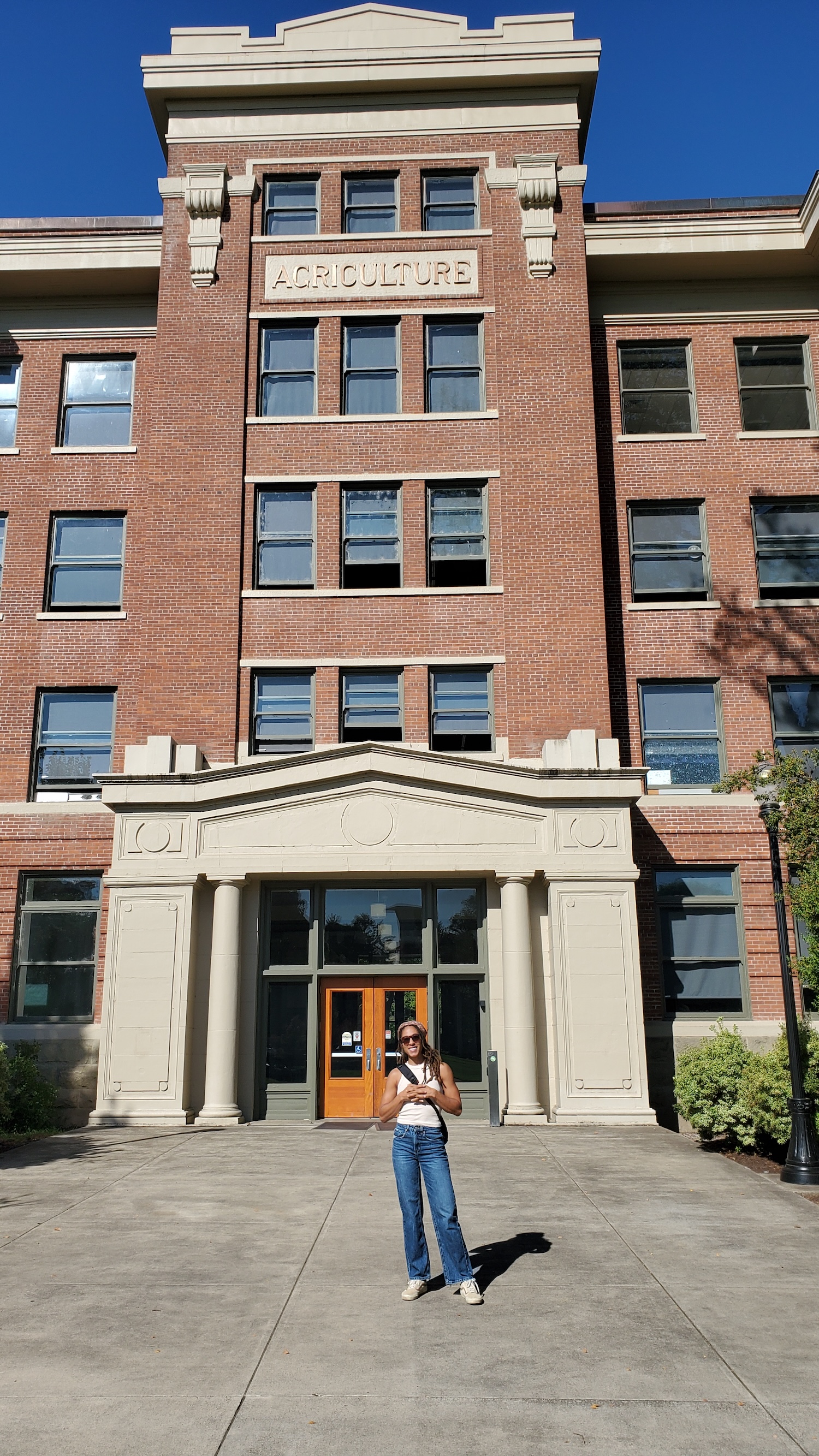
When I returned home, I started searching for graduate programs that fit my criteria: somewhere in the western U.S., values rooted in diversity and inclusion, research aligning with community-based marine management, an advisor whose work resonated with mine, access to climbing, and funding support. Against all odds, I found the perfect match.
Applying was a challenge in itself (that’s a story for another blog), but when I got my acceptance letter, I was in disbelief. The next step was to visit the campus. That’s where BWEEMS came in once again. At the time, my income was minimal, and I wasn’t sure how I’d cover travel expenses. Then the BWEEMS Mini-Grant Program was announced. I applied immediately, hoping it could bridge the gap—and it did. Their support covered the gas costs for my trip, allowing me to visit the university in person. That visit solidified my decision to enroll.
Now, I’m halfway through my first term as a Master of Science student, studying how cultural heritage and local participation influence marine conservation outcomes. It still feels surreal, but I’m exactly where I’m supposed to be.
I couldn’t have made it here without the support of many people and organizations, especially BWEEMS. Their encouragement and mini-grant program made it possible for me to take this leap with confidence. Thank you, BWEEMS, for helping me (and so many others) find belonging, community, and strength in this journey.
Here’s to diving deeper—into research, representation, and the work that connects people to the ocean!